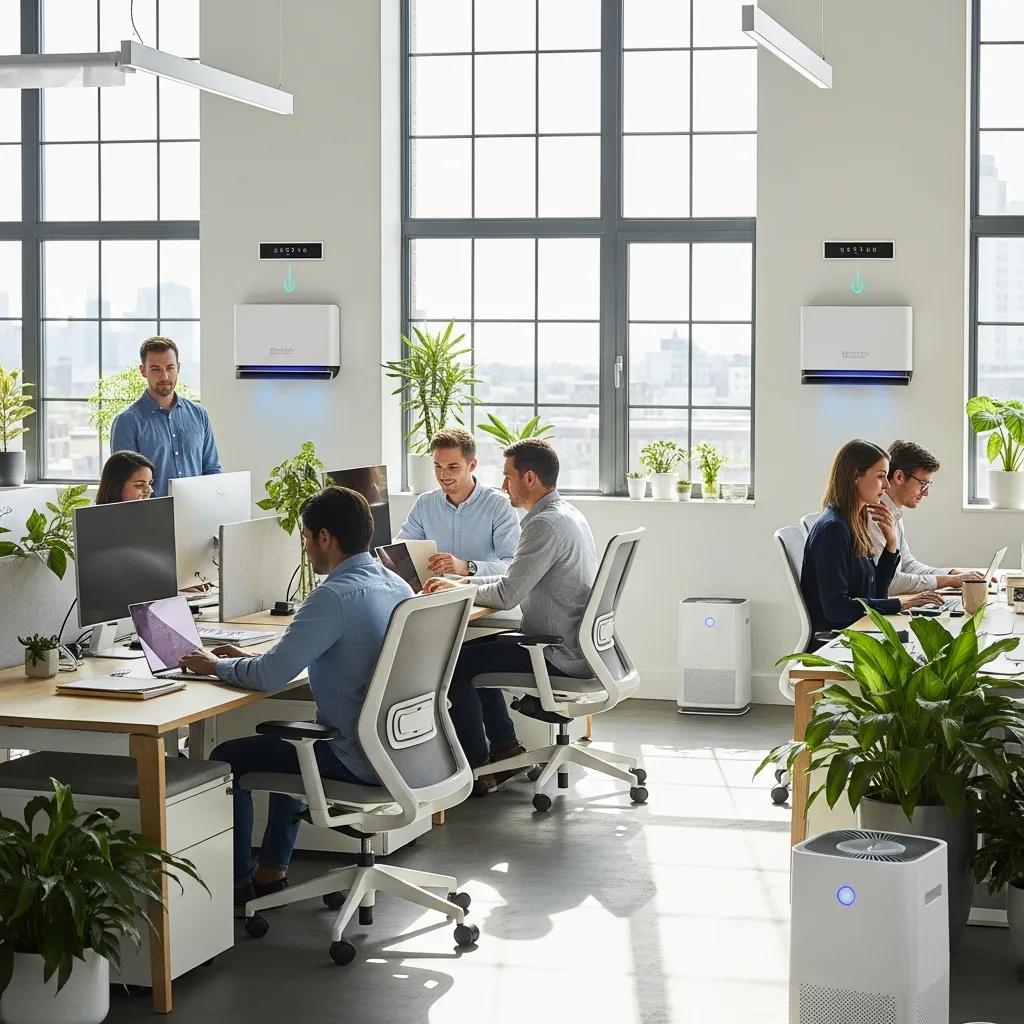
Better Indoor Air for Your Business: Practical Commercial Air Purification & HVAC Solutions
Indoor air quality (IAQ) affects employee health, comfort, and focus — and it’s something businesses can improve. Poor air can cause respiratory irritation, headaches and reduced cognitive performance. This guide walks through straightforward, effective steps for commercial spaces: upgraded air purification, smarter ventilation, and humidity control. Read on to learn about common pollutants, the value of IAQ upgrades, and practical actions your team can take to create a healthier workplace.
Common Indoor Air Pollutants in Commercial Buildings
Indoor pollutants come from many places: building materials, office equipment, cleaning products and outdoor air that gets inside. Identifying common contaminants is the first step toward targeted, cost-effective IAQ improvements.
Which airborne contaminants hurt employee health and focus?
Typical airborne contaminants include particulate matter, volatile organic compounds (VOCs), and biological agents like mold and allergens. Particulate matter—dust, smoke and fine particles—can irritate lungs and lower comfort. VOCs, released by paints, cleaners and some office equipment, can cause headaches and fatigue. Biologicals such as mold spores and pollen trigger allergies and asthma symptoms, all of which reduce productivity and increase sick days.
How do VOCs, mold and allergens degrade office air?
VOCs can build up indoors and contribute to “sick building” symptoms—headaches, eye or throat irritation and general discomfort. Mold grows where moisture collects and releases spores that can worsen respiratory conditions. Everyday allergens — dust mites, pet dander and pollen — also lower air comfort. Addressing these threats means combining filtration, ventilation and moisture control for consistent results.
How Advanced Commercial Air-Purification Systems Help

High-quality air-purification solutions remove or neutralize contaminants so occupants breathe cleaner air. Commercial systems use a mix of filtration technologies and targeted devices to lower particle loads, reduce odors and limit pathogen transmission — important for both day-to-day comfort and long-term health.
What are the benefits of MERV and HEPA filters for business HVAC systems?
MERV (Minimum Efficiency Reporting Value) and HEPA (High-Efficiency Particulate Air) filters are core tools for cleaner air. MERV ratings (1–16) show a filter’s ability to capture particles — higher numbers catch smaller particles. HEPA filters capture 99.97% of particles down to 0.3 microns, making them highly effective for fine particles and many airborne contaminants. Upgrading filtration can noticeably reduce dust, allergens and other particulates that affect comfort and health.
How do UV-C germicidal lights neutralize airborne pathogens in offices?
UV‑C germicidal lamps work by damaging the DNA or RNA of bacteria and viruses, preventing them from reproducing. When installed correctly inside ductwork or in standalone units designed for occupied spaces, UV‑C can reduce viable microbes in the air and on surfaces. It’s an effective complement to filtration — especially in high‑traffic areas — when used according to safety guidelines.
Why Ventilation and Humidity Control Matter for Commercial IAQ

Ventilation and humidity are the operational levers for healthy indoor air. Proper outside-air exchange lowers pollutant concentration, while stable humidity reduces mold risk and improves occupant comfort. Together, they reinforce filtration and pathogen-control measures.
How does proper ventilation meet ASHRAE standards for commercial spaces?
Ventilation dilutes indoor pollutants and supplies fresh air. ASHRAE Standard 62.1 sets recommended ventilation rates based on occupancy and room type to maintain acceptable IAQ. Following those guidelines helps lower airborne disease risk and keeps workplaces feeling fresher and more comfortable.
What humidity-control strategies prevent mold and improve comfort?
Keeping indoor relative humidity roughly between 30% and 60% helps prevent mold and keeps occupants comfortable. Effective strategies include using building‑sized dehumidification, managing drainage and building envelope moisture, and scheduling regular HVAC inspections to catch leaks or condensation issues early. Proactive moisture control is one of the most reliable ways to avoid mold remediation expenses later.
Humidity control in commercial buildings has been a persistent technical and operational challenge for the industry.
Health and Productivity Benefits of Better Indoor Air
Investing in IAQ pays dividends: fewer sick days, better concentration and a more comfortable workplace. For businesses, those improvements translate into measurable productivity and lower indirect health costs.
How does improved IAQ reduce sick building syndrome and absenteeism?
Improved ventilation, effective filtration and moisture control reduce the triggers behind sick building symptoms — headaches, irritation and fatigue. When those factors are addressed, employees report better comfort and fewer health complaints, which leads to reduced absenteeism and steadier productivity.
What is the ROI of investing in commercial IAQ solutions?
IAQ upgrades often show strong returns. Cleaner air supports employee health and focus, which can increase productivity and reduce healthcare and absence costs. Studies commonly estimate returns in the range of several times the investment made on IAQ improvements, though results vary by intervention and workplace conditions.
Why choose GV's Heating & Cooling for your commercial IAQ needs?
At GV’s Heating & Cooling, we combine local experience with practical solutions. Since 1990 we’ve served Glenview, IL and the North Shore with responsive, professional HVAC service — from system upgrades and air purification to emergency repairs. If you want to discuss a project or get started, you can contact us and a member of our team will walk you through options.
What commercial IAQ services and financing options does GV's Heating & Cooling offer?
We provide commercial IAQ services that include system design and installation, regular maintenance plans, and tailored financing to help spread costs. Our technicians monitor performance and recommend solutions—filter upgrades, UV‑C integration, ductwork improvements or whole‑building ventilation fixes—so your building breathes better year‑round. Learn more about financing at the linked resource.
How do local case studies show GV's Heating & Cooling's expertise in Glenview, IL and the North Shore?
Local projects demonstrate our hands‑on expertise: we diagnose air‑flow issues, replace failing furnaces, and install filtration and humidification systems that make measurable differences. Customers appreciate our fast response and preventive approach, and we offer emergency HVAC service when urgent problems arise.
How to get started improving indoor air quality today
Immediate steps can improve IAQ: tighten maintenance schedules, upgrade filters, monitor humidity and consult with HVAC professionals. Small changes often yield quick comfort gains while you plan larger system improvements.
What is the process for scheduling a commercial IAQ assessment with GV's Heating & Cooling?
To schedule a commercial IAQ assessment, reach out online or by phone. We’ll review your needs, inspect the space and provide a clear scope and estimate so you can decide with confidence.
Which maintenance plans ensure long-term IAQ performance and energy efficiency?
Our tailored maintenance plans combine scheduled inspections, timely filter changes and system tune‑ups to keep IAQ steady and energy use low. Regular care prevents small issues from becoming costly repairs and helps systems run at peak efficiency.
| Air Purification Technology | Mechanism | Benefits |
|---|---|---|
| MERV Filters | Particle capture in HVAC return air | Reduces dust, pollen and allergens |
| HEPA Filters | High‑efficiency particle trapping (down to 0.3 µm) | Significantly lowers fine particles and improves air quality |
| UV-C Germicidal Lights | UV‑C inactivates microbes | Reduces live pathogens and surface contamination |
The table above summarizes common technologies and what they do. To explore equipment and components we recommend, visit our shop.
Improving indoor air quality is a practical investment in employee well‑being and business performance. By understanding pollutants, choosing the right filtration and ventilation strategies, and controlling humidity, you can create a healthier, more productive workplace.
Ready to Improve Your Commercial Indoor Air Quality?
Cleaner indoor air makes a real difference — healthier employees, fewer sick days and improved productivity. Combining advanced air purification, proper ventilation and humidity control delivers measurable benefits. Contact GV’s Heating & Cooling today to have our team assess your building and recommend the right solutions to fit your budget and goals.