


Common Furnace Problems and Solutions: Troubleshooting, Fixes, and Repair Costs
A failing furnace doesn’t just make your home uncomfortable — it can also create safety concerns. Knowing the common issues and how to respond quickly makes a big difference. This guide covers the usual furnace problems — from no heat to short cycling — explains how the components produce those symptoms, and outlines safe, practical steps you can try at home to diagnose or temporarily mitigate the issue. GV’s Heating & Cooling has been serving homes and businesses since 1989 with trusted HVAC repair, air conditioning, and performance contracting to keep your space comfortable, healthy, and efficient. Contact us!
You’ll learn how to spot symptoms, run safe DIY checks, read diagnostic signals, and decide when it’s time to call a technician. We cover six core areas: why a furnace stops heating, causes of cold air output, why furnaces get noisy, short cycling, typical repair cost ranges, and essential maintenance to avoid future failures. Expect clear symptom→cause→fix tables, step-by-step troubleshooting, safety notes, and simple guidance on when to escalate to a pro so you can act confidently.
Why Is My Furnace Not Heating? Troubleshooting Common Heating Issues
If the furnace runs but no warm air comes out, the system’s combustion or heat transfer isn’t working properly. That usually traces back to airflow restrictions, ignition or fuel delivery problems, or control and thermostat errors. Knowing the basic mechanism — air moving across the heat exchanger, ignition creating a flame, and the blower circulating warmed air — helps you match symptoms to likely component faults and choose safe checks first. Early detection protects the equipment and indoor air quality by reducing stress on the heat exchanger and avoiding combustion inefficiency. The following sections list common symptoms, likely causes, practical troubleshooting steps, and clear points to call a professional.
What Are the Symptoms of a Furnace Not Heating?
Signs a furnace isn’t producing heat include cold air at the vents while the blower runs, long runtimes with no temperature gain, and the system showing error codes or safety lockouts. You might see the thermostat call for heat but the burners never ignite, or hear clicking with no flame. Simple checks — like feeling supply vent temperatures — help confirm a real heating failure. Other red flags are unusual odors (chemical or a rotten-egg gas smell) and soot or discolored burners — both need immediate attention. These symptoms point to the next safe diagnostics homeowners can try before calling for service.
What Causes a Furnace to Stop Heating?
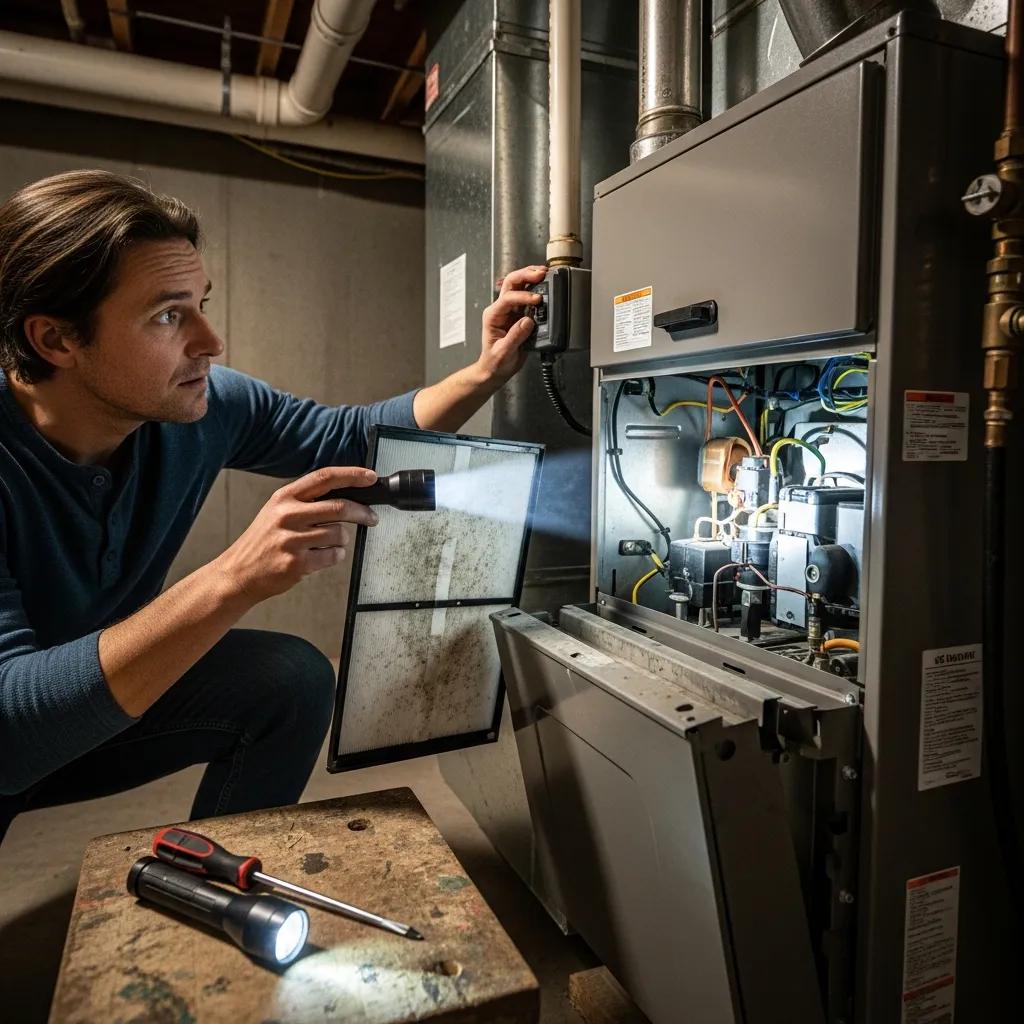
Common root causes include restricted airflow from dirty filters, thermostat settings or wiring issues, ignition or pilot failures, interruptions in gas supply, and electrical or safety limit trips that shut the burners off. Each problem affects the system differently — a clogged filter reduces combustion air and heat transfer, a misconfigured thermostat won’t send the right signal, and an ignition failure prevents fuel from burning. Matching the symptom to the likely cause saves time and shows whether a simple homeowner action will help or if a technician is needed. The table below maps symptoms to probable causes and immediate DIY checks.
Different symptoms point to predictable component problems and straightforward verification steps.
| Symptom | Likely Cause(s) | Immediate DIY Check | When to Call Pro |
|---|---|---|---|
| Blower runs, air is cold | Ignition failure, gas supply off, faulty ignitor | Confirm thermostat call, listen for the ignition sequence, visually inspect gas valve if accessible | If the burners never light or you smell gas |
| Unit not powering on | Tripped breaker, blown fuse, open limit switch | Check the electrical panel breakers and the furnace power switch | If the breaker resets but the unit remains dead |
| Furnace cycles but no heat | Dirty air filter, closed vents, dirty flame sensor | Replace the filter, open supply registers, observe the burner flame if safe to do so | If cleaning or replacing parts doesn’t restore heat |
| Burning smell or soot | Combustion problem, clogged burners, cracked heat exchanger | Look for soot and odd smells; run carbon monoxide detectors | Immediate professional call for any combustion concern |
This quick-reference table helps you prioritize safe DIY checks and shows when a persistent symptom requires a professional inspection, especially for combustion- or gas-related issues.
How Can I Troubleshoot a Furnace That’s Not Heating?
Begin with low-risk checks that verify controls and airflow: confirm thermostat settings and batteries, replace the air filter, check circuit breakers, and make sure the furnace power switch is on. Then watch the startup sequence: when the thermostat calls for heat, listen for the inducer fan, the ignition click, and the burner flame — note which step stops. Use safe resets only (turn the furnace off for 30 seconds, then back on) to clear control lockouts; don’t open combustion compartments or attempt gas valve repairs. If ignition or combustion steps fail, or you smell gas, stop DIY work and contact a qualified technician immediately.
When Should I Call a Professional for Furnace Heating Problems?
Call a pro for any safety-related symptom such as the smell of gas, a carbon monoxide alarm, visible soot, or suspected heat exchanger damage — these are immediate risks. Also call when ignition or electrical faults persist after basic checks, when control board errors or repeated lockouts occur, or when you see irregular flame patterns or corrosion. For urgent or unsafe conditions, choose a technician who offers emergency response. GV’s Heating & Cooling provides 24/7 emergency service in Glenview, IL and the North Shore and is ready when safety or complexity demands a professional.
How Do I Fix a Furnace Blowing Cold Air? Effective Solutions and Tips
If your furnace is running but blowing cold air, it usually means the blower is on while the burners aren’t producing heat. Common causes are airflow restriction, ignition or gas supply issues, or control/fan problems that run the blower out of sequence. Fixes range from replacing a filter to checking the fan limit switch and watching the ignition sequence. Whether the air is cold right at startup or after a short warm-up helps separate normal warm-up times from persistent faults. Below we cover signs, causes, practical DIY fixes with safety notes, and when to call a technician.
What Are the Signs of a Furnace Blowing Cold Air?
Look for steady cold airflow at supply registers while the furnace cycles, a brief warm-up followed by cold air, or the blower running continuously with no burner ignition. Verify the thermostat is in heating mode and set above room temperature, then check if the blower runs only during a heat call or all the time. If only some rooms are cold or a heat pump is off, that can point to airflow or zoning issues like closed vents. These observations guide the next DIY checks focused on airflow and ignition.
What Causes a Furnace to Blow Cold Air?
Typical causes include clogged air filters or blocked returns that reduce combustion air and trip safety limits, a malfunctioning fan limit switch that runs the blower at the wrong time, interruptions to ignition or gas supply, and mechanical failures such as a seized gas valve or a failed control board. Restricted airflow can raise combustion temperatures and trigger safety limits, leaving the blower running without heat. Pinpointing the part behind the symptom determines whether a basic cleaning will help or a professional repair is needed.
What Are DIY Fixes for a Furnace Blowing Cold Air?
Start with simple repairs: replace or clean the air filter, open supply and return vents, and make sure the thermostat has fresh batteries and the correct mode selected. Try a controlled power cycle: turn the furnace off, wait 30 seconds, then turn it back on and watch the ignition sequence — note any clicking without flame. If you’re comfortable, vacuum accessible vents and the blower inlet with the power off, but do not attempt to clean burners or internal ignition components unless trained. These steps often restore heat; if not, schedule professional diagnostics.
Below is a compact repair table for common faults and homeowner actions.
| Air filter | Clogged/restricted | Replace filter with the correct size | Replacement filters | Turn power off before opening the panel |
|---|---|---|---|---|
| Thermostat | Wrong mode or dead battery | Reset mode and replace batteries | Batteries, small screwdriver | Avoid rewiring the thermostat if unsure |
| Fan limit switch | Stuck or miscalibrated | Power cycle unit and inspect for debris | Flashlight, vacuum | Limit switch adjustments should be done by a pro |
| Ignitor/pilot | No ignition | Observe the startup sequence and reset per manual | None | Do not attempt gas valve repairs; call a professional if ignition fails |
When Is Professional Repair Needed for Cold Air Issues?
If cold-air symptoms continue after basic airflow and thermostat checks, or if you observe ignition failures, weak or absent burner flames, or smell gas, call a professional right away. Also seek help when the fan limit switch or ignitor appears faulty, when there are heat exchanger concerns, or when repeated resets don’t restore heat. GV’s Heating and Cooling offers diagnostic and repair services — including emergency response — for sustained faults or any safety-related symptom.
What Causes a Noisy Furnace? Identifying and Solving Common Noise Problems
Noisy operation can signal specific mechanical or airflow issues that hurt performance or warn of upcoming failure. Common noise sources include mechanical wear (bearings, belts), combustion irregularities, and duct resonance. Listening to when and how the system sounds narrows the likely faulty component. This section categorizes common sounds, explains typical causes, and lists fixes ranging from tightening panels to scheduling professional motor or heat exchanger service.
What Types of Noises Does a Furnace Make and What Do They Mean?
Typical furnace noises include a loud bang or boom at startup (often delayed ignition or thermal expansion), squealing that suggests motor or belt wear, rattling from loose panels or debris in the blower, and whistling that points to airflow restriction or duct leaks. Each sound ties to a subsystem — combustion chamber, blower motor, belt drive, or ductwork — so noting when the noise appears (startup, during run, or shutdown) helps isolate the cause. That timing and tone guide the next corrective steps.
What Are the Common Causes of Furnace Noise?
Mechanical sources include worn blower bearings, failing motors, loose cabinet screws, and stretched belts. Airflow-related noise comes from clogged filters, closed vents, or duct resonance, while combustion noises may stem from delayed ignition or burner misalignment. Over time vibration loosens fasteners and debris can build up in the blower, both increasing noise and reducing efficiency. Regular inspection and preventive maintenance keep moving parts lubricated, fasteners tight, and air paths clear to prevent many noise issues.
How Can I Reduce or Fix Furnace Noise?
Start with simple steps: tighten cabinet screws, replace a worn filter, and clear debris from the blower area with the power off. Lubricate serviceable motors and bearings per the manufacturer’s instructions and replace worn belts to stop squeals. For noises linked to the heat exchanger, major motor failure, or combustion irregularities, schedule professional service to avoid safety risks and costly secondary damage. Regular tune-ups catch problems early and reduce disruptive, expensive breakdowns.
What Is Furnace Short Cycling and How Can I Fix It?
Short cycling is when the furnace turns on and off in short bursts — typically less than five minutes per cycle. It causes inefficiency, extra wear, and uneven heating. The usual causes are control or airflow problems: thermostat errors, clogged filters, a faulty flame sensor, or an oversized furnace that reaches temperature too quickly. Understanding the root cause helps decide between quick fixes (filters, thermostat location) and longer-term solutions (correct sizing, sensor replacement).
What Are the Symptoms of Furnace Short Cycling?
Symptoms include frequent on/off cycles under five minutes, failure to reach or hold the set temperature, and uneven room temperatures with higher energy bills. You can time on/off behavior manually or review thermostat runtime logs. Noting whether cycles occur right away or after a few minutes of operation helps narrow the cause. Because short cycling accelerates wear, fixing it promptly preserves system life and efficiency.
What Causes Furnace Short Cycling?
Primary causes are restricted airflow (dirty filter or blocked vents), thermostat placement near drafts or heat sources giving false readings, an oversized furnace for the space, and control or flame-sensing faults that shut burners down prematurely. Airflow issues lead to overheating and limit trips, while sensor and control faults interrupt normal combustion. Mapping symptoms to these causes directs troubleshooting and helps decide whether homeowner adjustments or professional help are needed.
How Can I Troubleshoot and Prevent Furnace Short Cycling?
Begin with routine checks: replace the air filter, verify all vents and returns are open, and relocate or recalibrate a thermostat that’s reading incorrectly. If safe and accessible, clean the flame sensor, confirm thermostat programming and setback schedules, and consider zoning or thermostat upgrades to better manage load. If short cycling continues after these steps, schedule a professional assessment to evaluate furnace sizing, ductwork, and control circuitry for a long-term fix.
When Should I Contact GV’s Heating and Cooling for Short Cycling?
If short cycling continues after filter changes, thermostat adjustments, and clearing vents — or if cycles come with odd smells, noises, or error codes — contact GV’s Heating and Cooling for diagnostic service. Repeated short cycles speed up wear and can hide combustion or control faults that require specialist tools to diagnose. GV’s serves Glenview, IL and the North Shore and can recommend the right repair or replacement strategy to restore efficient, reliable heating.
How Much Does Furnace Repair Cost? Understanding Pricing for Common Repairs
Repair costs depend on the part, labor complexity, system age, and whether service is emergency or scheduled. National average ranges help set expectations, but exact quotes need an on-site diagnosis. Part availability, diagnostic time, and after-hours work can all increase a final bill. Regular maintenance lowers both the chance and scope of expensive repairs. Below we list typical cost ranges, explain emergency surcharges, describe cost drivers, and show how maintenance reduces long-term expenses.
How Do Emergency Repairs Affect Furnace Repair Costs?
Emergency or after-hours repairs usually include premium labor rates and an emergency surcharge for immediate dispatch, which raises the total. Emergency service is appropriate for safety issues — gas leaks, carbon monoxide alerts, or total heating failure in extreme cold — but non-urgent problems can often be scheduled during regular hours at lower rates. If there’s any immediate risk, get emergency help; otherwise, scheduling can save money.
What Factors Influence Furnace Repair Pricing?
Key cost drivers are part price and availability, system age and model complexity, diagnostic time to find the root cause, component accessibility, and whether an emergency visit is needed. Labor rates vary by region and technician qualifications; older systems may require hard-to-find parts or more extensive work. When you call for a quote, give the make/model, symptoms, and any error codes to help the technician estimate diagnostic and repair time more accurately.
How Can Regular Maintenance Reduce Repair Costs?
Routine tune-ups catch wear and small faults before they grow into major failures, lowering the chance of costly emergency repairs and extending equipment life. Regular filter changes, burner cleanings, control checks, and combustion safety inspections keep the system efficient and reliable. Paying for annual professional maintenance usually saves more over time through fewer repairs and better efficiency than the cost of the service itself.
How Can I Maintain My Furnace to Prevent Problems? Essential Maintenance Tips
Proactive maintenance preserves performance, efficiency, and safety. A short homeowner checklist plus an annual professional tune-up addresses most common failure modes. Routine actions — filter replacement, vent clearance, thermostat checks — are low-effort and high-impact. Professional visits cover combustion analysis, heat exchanger inspection, and electrical diagnostics. The sections below explain filter frequency, homeowner tasks, what professionals do during tune-ups, and how maintenance improves efficiency and safety.
How Often Should I Change My Furnace Filter?
Inspect filters monthly and replace them every 1–3 months depending on pets, allergies, and how often you run the system. High-efficiency or pleated filters can last longer but still deserve regular checks. A clean filter improves airflow, reduces blower strain, and helps combustion efficiency — which lowers energy use and the risk of repairs. Keep a note of filter size and type so you replace with the correct model, and set calendar reminders to stay on schedule.
What Are Key Furnace Maintenance Tasks Homeowners Can Do?
Homeowners can do several safe, effective tasks: replace filters, keep the furnace area free of storage and lint, ensure supply and return vents are open, change thermostat batteries, and look for soot, water, or unusual odors. These steps remove common failure triggers and improve comfort. Leave burner cleaning, gas valve adjustments, and electrical diagnostics to professionals. Simple regular care often resolves the root of many complaints.
Why Are Professional Furnace Tune-Ups Important?
Professional tune-ups include combustion testing, heat exchanger inspection, electrical and safety control checks, and airflow balancing that reveal issues homeowners can’t see. Technicians calibrate flame sensors, test and adjust gas pressure, and verify safety interlocks to prevent dangerous failures and inefficiency. Investing in professional service reduces emergency risk, extends equipment life, and often yields efficiency gains that offset the tune-up cost.
How Does Proper Maintenance Improve Furnace Efficiency and Safety?
Good maintenance — clean filters, tuned burners, and checked controls — improves combustion efficiency, lowers energy bills, and cuts the risk of carbon monoxide leaks or fire hazards. Regular inspections spot early corrosion, cracks in the exchanger, or failing electrical parts before they become dangerous. A consistent maintenance program delivers both economic and safety benefits, keeping your home comfortable and occupants protected over time.
- Replace filters early and inspect monthly to keep airflow steady and reduce strain.
- Keep vents and returns clear so heat distributes evenly and short cycling is less likely.
- Schedule annual professional tune-ups to catch hidden risks and optimize combustion.
- Watch for safety signals (gas smells, CO alarms, soot) and treat them as immediate priorities.
Follow these practical steps and pair them with professional service when needed to prevent most common furnace failures and keep your heating reliable throughout the season.
Conclusion
Knowing common furnace problems and their fixes helps you keep your home comfortable and safe. By recognizing symptoms and following clear troubleshooting steps, you can often resolve minor problems quickly and know when to call a professional. For deeper guidance or expert service, contact GV’s Heating & Cooling — we’re here to help keep your furnace running smoothly and reliably.